
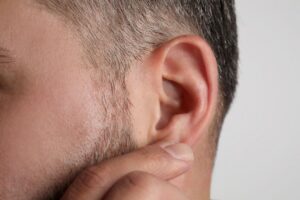
Ear surgery, clinically known as otoplasty, can help address the appearance of prominent, asymmetrical, or misshapen ears that have been a source of self-consciousness for years. Understanding whether you meet the criteria for this procedure requires a personalized evaluation by a board-certified plastic surgeon who can assess your anatomy, health history, and goals. Keep reading to learn more about what the process looks like and what to expect at each step.
What Is Ear Surgery and Who Is It Designed to Help?
Ear surgery is a procedure that reshapes the cartilage and soft tissues of the outer ear to improve its proportion, symmetry, or position relative to the head. It does not affect hearing and is performed solely on the ear’s external structure.
Common Concerns Otoplasty May Address
Patients who pursue ear surgery often share similar concerns. The procedure may help improve the appearance of:
- Ears that protrude significantly from the sides of the head: “Prominent ears”, “Dumbo ears”
- Ears that appear too large or disproportionate to the face
- One ear that sits at a noticeably different angle than the other
- Ears with underdeveloped cartilage folds
- Ears affected by prior injury or trauma
Both adults and children may be candidates, though the timing of surgery matters. In pediatric patients, we generally prefer to wait until the ear cartilage has reached adequate stability, which typically occurs around age five or six. For adults, there is no upper age limit, but cartilage is often more stiff as we get older.
At Mountain Lake Plastic Surgery, Dr. Susan MacLennan brings extensive surgical experience to every consultation. Her background in both reconstructive and cosmetic surgery, developed over years of training at a large Children’s hospital as well as decades of practice, means she evaluates each patient with a comprehensive, experienced eye.
Am I a Good Candidate for Ear Surgery? Key Factors We’ll Evaluate
Physical Health and Healing Capacity
Good overall health is a foundational requirement. Patients should be non-smokers or willing to stop smoking well before and after surgery, as smoking can impair circulation and delay wound healing. Certain medical conditions, medications, or clotting disorders may also affect candidacy and will be reviewed during your consultation with Dr. MacLennan.
Realistic and Stable Goals
Ear surgery may help improve symmetry and achieve a more balanced appearance, but individual results vary.
Emotional Readiness
Candidacy also includes emotional readiness. Patients who have thought carefully about their decision and can articulate what they hope to change tend to have the most satisfying outcomes. Dr. MacLennan’s approach is to listen carefully during consultations, ensuring that each patient’s goals are heard and honestly assessed before any surgical plan is discussed. As parents, it can be hard to decide for your child when the right time for ear surgery might be. While we can offer surgery to some children as young as 5, sometimes prominent ears don’t bother the child as much as they bother the parents, and it may be better to wait until the child can participate in the decision.
What to Expect Before, During, and After Ear Surgery
Understanding the process from consultation to recovery helps patients feel prepared and confident in their decision.
Before Surgery
Dr. MacLennan will conduct a thorough medical history review, examine the ears in detail, and take photographs for surgical planning. You may be asked to discontinue certain supplements or medications that increase the risk of bleeding. Pre-operative instructions will be provided well in advance so there are no surprises on the day of your procedure.
The Procedure Itself
Otoplasty is typically performed in our private office under local anesthesia for adults or older teens, or at Green Mountain Surgery Center under general anesthesia for younger patients. Most procedures take about two hours, depending on complexity. Incisions are generally placed in the crease behind the ear to minimize visible scarring. In most cases, the incisions aren’t visible even with your hair in a ponytail!
Recovery and Results
Most patients experience mild to moderate swelling and some tenderness in the days following surgery. In most cases, Tylenol and ibuprofen are enough for comfort, and most children don’t need to take prescription pain medicine. A bulky padded dressing is worn for the first few days, followed by a soft protective headband for several weeks to protect the ears. Strenuous activity should be avoided during the first 1-2 weeks, and contact sports may need to wait for a month or more. Swelling gradually resolves over several weeks, and the refined contour of the ear becomes more visible as healing progresses.
Why Choose Mountain Lake Plastic Surgery in Colchester, VT?
Patients throughout Vermont and northern New England choose Mountain Lake Plastic Surgery for ear surgery and other cosmetic procedures because of the depth of experience and personalized care Dr. MacLennan brings to every patient relationship. Dr. MacLennan is board-certified by the American Board of Plastic Surgery and is Vermont’s leading member of the prestigious American Society for Aesthetic Plastic Surgery. She also serves as an Examiner for the Board’s Oral Exam, actively contributing to safety standards and education for the next generation of plastic surgeons.
Frequently Asked Questions About Ear Surgery
At what age can someone have ear surgery?
Children are generally considered candidates for otoplasty once their ears have reached close to adult size. This can be as early as 5-7 years old. Adults of any age may pursue the procedure, provided they are in good overall health and their goals are realistic. During a consultation, Dr. MacLennan evaluates each patient individually for candidacy.
Will ear surgery leave visible scars?
Incisions are carefully placed behind the ear in the natural crease to minimize visible scarring. As healing progresses over several months, scars typically fade considerably and become difficult to detect.
Can ear surgery correct asymmetry if only one ear is affected?
Ear surgery can be performed on one or both ears, depending on the patient’s anatomy and goals. When only one ear requires correction, Dr. MacLennan works to achieve balance with the untreated side. A careful pre-operative assessment helps establish realistic expectations for symmetry.
How long does recovery from ear surgery typically take?
Most patients return to desk work and light daily activities within one week, though strenuous exercise and contact sports should be avoided for several weeks. Kids may want to take a week off school due to the bulky dressing we use at first – it looks a little funny but works well! A protective headband is typically worn during sleep for four to six weeks to support the healing cartilage. Swelling and minor discomfort are common in the first week and gradually improve. Rest assured, Dr. MacLennan and her team will provide a recovery plan specific to your procedure.
Schedule Your Ear Surgery Consultation
If you are still wondering whether you are a good candidate for ear surgery, the clearest answer comes from a one-on-one evaluation with Dr. MacLennan. Mountain Lake Plastic Surgery welcomes patients from across Vermont and northern New England. Complete our online contact form to schedule your personalized consultation with Dr. MacLennan and take the first step toward the change you have been considering.


